But You Don’t Really Care for Edits, Do Ya?

Attitude & Critiques, Uncategorized

The Editor’s Perspective: Giving and Receiving Feedback

By Toni Adwell

Most editors have horror stories about authors being obstinate, oblivious, or downright rude about any changes being made to their work. Don’t get me wrong: I understand where the authors are coming from, too. Some editors and proofreaders have no tact, and there are certain critiques and edits I’ve gotten on my writing that baffle me as an author.

“Your intro comes on too strong.”

“You mean I’m not supposed to hook and engage the reader?”

When it comes down to it, though, there are certain aspects of writing that cannot be compromised the majority of the time, such as grammar and spelling. I’m not talking about dialogue and style, because sometimes those will cause exceptions. When I write dialogue for the Troll in my FanFic, it’s nowhere near grammatically correct, and the spelling reflects my attempt at the Jamaican accent it’s based off of in World of Warcraft.

What I’m talking about are authors who refuse to recognize changes that need to be made due to passive voice, dangling modifiers, common word choice mistakes, such as lose/loose, than/then, their/they’re/there, assure/ensure/insure, and so on.
Those are non-negotiable in the body of the work.

That being said, here are a few friendly tips when giving or receiving critiques and edits:

  • Keep in mind the difference between constructive criticism, and being an asshole. “This is incorrect because of xyz, so here’s what to keep in mind, and an example of what to use instead.”–Good. “Your work is horrible, and as a result I’m not able to differentiate between your work and you as a person, so you must also suck!”–Not good.
  • Tone can be lost in translation on the Internet. What might sound polite to one person can sound completely rude to another. Don’t assume people are being jerks with their critiques/edits, unless it’s obvious like the example above.
  • Remember, even if you don’t like what you’re reading/editing/critiquing, that someone put a lot of effort, work, and likely heart and soul into writing the piece. It’s not cool to trash someone simply because you’re not down with the subject matter. If you can’t handle the content, then correct the technical mistakes, and suggest another editor/proofreader to go over the work for said content. The same goes for their ability to write. “We are all apprentices in a craft where no one ever becomes a master.”–Ernest Hemingway
  • We’re losing the ability to be polite in our society, and even if you don’t agree with what someone has to say about your work, thank them for their time, and move on. You’re not going to convince someone to change their mind about it, especially when what a person likes is opinion-based, but they did take time out of their day to read it and respond. Even if they’re being asshats, you don’t need to stoop to their level–you are not a mirror for their behavior. “I respect your opinion, even though I don’t agree. Thank you for your time.” You don’t have to like someone, or their opinion, to be polite to them. 
  • The hardest one? Don’t take it personally. It’s really difficult not to, because of how much proverbial blood, sweat, and tears goes into writing. Hell, sometimes the blood, sweat, and tears are literal. Your work is made from a piece of you, and when someone is down on it or doesn’t like it, that can be a major blow to your self-esteem and ego. The best thing you can do is listen to what they’re saying with your mind, and not your heart.

TL;DR: Don’t be a jerk, don’t assume others are jerks, be polite, and don’t take it personally.

Do you have any horror stories about an editor or an author? Feel free to vent in the comments. No need to name anyone or their work, but sometimes you need to get things off your chest so you can move on. It’s cathartic!

Keep your chin up!

The Always Aspiring Writer

Toni Adwell is an editor with Damnation Inc. and an aspiring author. You can find out more about her at Legends of the Wordsmiths (http://lotwordsmiths.blogspot.com) where she gives book reviews, World of Warcraft fanfic chapters, and excerpts from her own work. 

The Editor’s Perspective: POV and you! …And you… and…

POV and You!

This week we’re exploring different POV styles and how to use them effectively.

Point of view mistakes in writing make up a bigger portion of my editing tasks than you would believe. Many burgeoning new writers may not take the actual method of different points of view into account when they’re working and trust me… it shows. Point of view is an insanely important part of writing; it can make or break a scene, a chapter, or even a book. It’s incredibly important to be aware of the different types and why you should recognize when to use them and how to remain consistent in that style. When I see a book come across my desk with bad POV mistakes, it makes me question the validity of said book being there.

This is NOT the impression you want to make on potential publishers, editors, or readers.

We’re going to take a look at the different types of point of view, or POV for short, and give you a brief break down of why and how to use them, and keep you from making a huge rookie mistake and switching your POV mid-sentence.

(Yes, I have seen this happen… more than you know.)

For the purpose of maintaining consistency in your writing, I am also going to show examples of head-hopping and tell you why you shouldn’t do it!

First, the different points of view:

First Person

Second Person

Third Person

     Limited

     Omniscient

First Person

First person is a cool way to literally have your writer ‘slip’ into the character’s brain and see the word from this perspective. The use of the pronouns ‘I’ and ‘me’ or ‘my’ are going to dominate this POV. Why? Because you are the protagonist. You experience the world with the immediacy of someone who’s there and witnessing it firsthand.

Example: I didn’t want to go to the mall, and shook my head curtly. I could already see tears welling up in her eyes, no doubt in an attempt to guilt me into going. I stomped my foot.

“Not again, Clarissa!” I shouted.

First person is used often in genre fiction like Y.A., autobiographical writing, or memoirs. It is never used in academic writing, so please never write your assignments this way!

Adult fiction can be written in first person, but I personally don’t see it done well very often. This POV can often be tricky, but we’ll cover that another week!

Second Person

Second person is unique in that it’s more informal and conversational with the reader. When you write on your blog (as I’m doing now), you are speaking directly to the reader and addressing them as though they are in the room with you. ‘You,’ ‘your,’ and ‘yours’ are going to be the words du jour with second person, since your ‘narrator’ is going to speak directly to them.

Example: Henry’s always getting fired up over nothing, but that’s the sort of thing you’ll come to understand about him. He’s probably just blowin’ off steam, so I wouldn’t take it too personal, if I were you.

Second person is often used in direction/instruction writing, advertisements, songs, blog writing, or occasionally in speaking. It’s not often used in fiction writing, unless your narrator/protagonist is attempting to directly speak to the reader, otherwise known as “breaking the fourth wall,” which pretty much means that your protagonist is expressing awareness of the fact that s/he is being observed by an outside source.

Think of Deadpool’s dialogue… even in a video game, he expresses plenty of awareness of his surroundings by addressing the player directly, and even grabbing health bars to beat other characters with. He is the epitome of a second person view, because he has no problem telling you right where you can shove those bars, either.

1360621-marvel_vs_capcom_3_deadpool__article_image

Definitely one way to show sentience…

In fiction writing, you have to have a particular style and skill in order to switch successfully in and out of second person and any other POV, so this should be used sparingly.

Third Person

Third person is the most popular POV to use in American fiction. Most novels you will read in America (and probably some other English speaking countries!) will be written in third person limited or third person omniscient, which I’ll cover in a moment.

Third person limited is more preferable to omniscient, at least in my experience, and is most typically what you’ll come across in modern fiction. It gives your narrator’s voice the ability to describe the world from an outsider’s perspective (like if you’re watching it through a video camera), while still focusing on the main protagonist and relaying their thoughts and feelings. ‘She,’ ‘he,’ ‘it,’ ‘they,’ ‘them,’ ‘her,’ ‘him,’ ‘his,’ ‘hers,’ and ‘its’ are going to be common in this POV.

Example: Amy held her breath, back pressed against the wall. The cold seeped into her bones, but she couldn’t move. The tip of a broken floor tile jammed its way painfully into the underside of her boot, but she didn’t dare make a sound. He might hear it.

Third person omniscient means that your narrator is still looking at things from an outsider’s point of view, but instead of expressing just one character’s intentions, it can express all of them. Third person omniscient means that your narrator is essentially invisible and watching the characters do their thang. They are not a character in your story. They do not express personal thoughts, feelings, or emotions. Something that is important to remember is that in third person omniscient, your narrator is an outside observer, which means that they cannot understand the internal thoughts your character has, and therefore, cannot describe thoughts or feelings that the characters themselves have not already expressed.

Correct:

Harry ran down the sidewalk, his tie furiously flapping over his shoulder. He waved frantically to the bus as it pulled away from the curb. “Wait!” he screamed. “Wait!”

At the stop next to him, Francine flipped her arm over and frowned down nervously at the watch on her wrist. “Thirty minutes ‘til the next one,” she said with a sigh.

Incorrect:

Harry ran down the sidewalk, feeling his lungs almost burst inside of his chest. Ugh, he thought, if I keep this up, I’ll get a stitch in my side.

At the bus stop, Francine glared down at her watch. Thirty minutes, she told herself, biting her lip. I’m gonna be late on my first day!

Third person omniscient is a trickier style to use, because when some writers attempt this, it becomes third person limited with… HEAD-HOPPING. (You thought I’d forgotten, didn’t you?) The incorrect example is actually a perfect example of something you shouldn’t do.

Let me let you in on a secret: Most editors and publishers are going to hate head-hopping, and most newbie writers are going to do it. Why? Because they don’t know how to consistently write in a proper POV, or because they think they can tackle third person omniscient, and… they can’t. That’s not a dig. If you’re not quite there yet with your ability to write in third person omniscient, keep trying but don’t submit that work until you’ve been able to clean it up once or twice at least and make sure you’re not making us feel like  we’re hearing voices.

(Unless your character, is, in fact, schizophrenic, in which case, okay, cool!)

Don’t ever put two characters’ independent thoughts on the same page unless you’re writing in third person limited and putting page breaks in between them to signify a POV switch from one character to the next.

(A page break is easy: three or four pound keys or hashtags, as the kids call them nowadays (###), or three or four asterisks (***) mid-page will do the trick.)

By head-hopping, you will end up creating a muddled, confusing scene in which we are simultaneously reading different characters’ minds. It’s not pleasant, it’s not good writing, and as an editor, it’s literally one of the most frustrating things to fix because I basically have to reconfigure entire portions of story to best fit who I think is the main protagonist based off of your writing. Basically, it becomes character Jenga, which is not as fun as it sounds.

Unknown

Like this except more tears. My tears.

Whether you are writing in first, second, or third person, make absolutely certain that you don’t deviate into another style. How can you keep track of this? Double check the pronouns from each of the styles, and pay attention to what you’re writing.

Does your third person limited style end up head-hopping? Figure out which person is your main character, and then focus on them. Make sure your first person style focuses solely on one character, like you’re in Being John Malkovich staring through his head. If you go second person, make sure your style is addressing the reader as though the character is aware of their presence and doesn’t question their narration of important parts of their life to an invisible stranger.

Screenshot 2016-01-19 01.13.14.png

I said don’t question it!

Screenshot 2016-01-19 01.13.22.png

At any rate, it’s really easy to accidentally make your writing sloppy by skipping around these various points of view… and more people than you realize end up doing this by accident.

Remember: Pick ONE and stay with it. You’ll save yourself (and future publishers!) a lot of headaches in the end.
 

The Editor’s Perspective: Too Much Information

Too Much Information...

One of the things that I consistently see—and am guilty of myself—is the habit of over-sharing.

Writers often have the difficult task of not only making up absolutely every part of their story down to where their character has an unsightly mole or embarrassing birthmark, but to do this mental and physical creation for every single character in their story. It’s exhausting!

Think about it: Imagine your friends or coworkers, or even family members. We’ll say just pick three at random. What do you know about them? Favorite color? How many fillings they have? When they were born? Their parents’ current city? The place they lost their virginity? Their first car? Their pet’s name from when they were ten that they use as a password? The amount of their bank account/s?

Now imagine their personal drives, inspirations, or fantasies.

Do they have a tortured secret from their past that haunts them to this day? Was their first love a con artist? Father an abusive drinker? Do they hate alcoholics for that reason? Are they one themselves? What’s their ultimate goal, their dream in life? What makes them keep going, even in the face of complete and total hopelessness?

Hell, what’s their favorite position in bed?

Likely, you won’t even have half of the answers to questions that specific, and probably not at all to that last one about your family members.


got-game-of-thrones-33991990-1232-737 

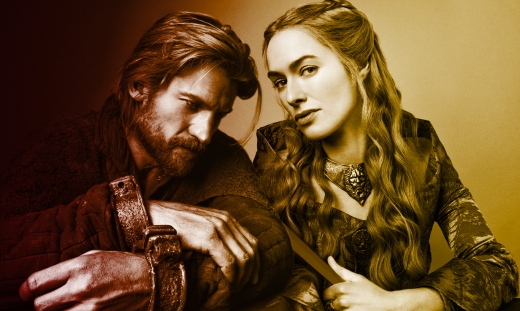
Please, no Jaime and Cersei Lannister jokes… except this one.

Moving on…

A writer may not have this specific information, but imagine knowing a person on a much more in-depth scale and then having that depth of knowledge for 10 other people in your book—or even more, if we’re going with Game of Thrones again. Now imagine that you have three stories that you’re working on concurrently, and each of those people also has those individual properties, and not to mention they’re in different genres, so it’s an entirely different type of world…

Oh, and some of them may only exist for one page. Or not even show up in the story at all.

What I’m saying is, there is a lot of information going on in a writer’s head at any given time, and sometimes it’s hard to compress that information to determine what goes into your book and what stays off the page.

I recently edited a short piece where the author randomly decided in the middle of an unrelated paragraph to go into detail about the character’s very specific job, her age, the length of time she had been at said job, the people she liked there, what she hoped to accomplish at the job in a couple of years, and the respect she hoped she garnered from her co-workers. It was random, it was waaaaaay too in-depth, especially given the parameter of what she had been talking about before, and it was absolutely over-share.

The toughest part? Not one single thing about that woman’s job mattered to the story at all, and given its awkward delivery and general unimportantness, it had to be completely cut. Do I feel bad when I make these suggestions? Yes, I do. Someone worked really hard to come up with a believable character with believable background information and wants to show that information. Are the changes necessary?

Let’s just say this: Nine times out of ten you can cut entire paragraphs of over-share from a book and not just make it shorter, but make the story better.

I thought you were supposed to be detailed in writing?

Absolutely! When world developing, it’s good to be as thorough as possible. There are numerous sites whose soul purpose is to help develop worlds and characters with intense detail. In the past, I’ve used LitLift to keep track of specific things about characters from their shady pasts and emotional and physical scars down to height, weight, eye, and hair color. Not all of these things make it into the pages of a book, and honestly, not all of them should. That does not mean you shouldn’t have that information before you write.

Think about how much more information J.K. Rowling was able to divulge about her Harry Potter series after the final book came out. The information you keep back can oftentimes be important to the development of your character or world, but still not entirely pertinent to the story itself.

Confused yet?

Writing differs from world building in that you have to be far more selective about where, when, and even if that information you’ve worked weeks, months, or years on makes it into the final cut. It’s basically having a giant bin of Legos and having to sift through it for all the exact right pieces. Could you use all of those pieces to build a cool spaceship? HELL. YES. Legos are amazing. All of those pieces would fit together one way or another.

detail-lego-building-bricks-g-come-giocare-milan-italy-november-trade-fair-dedicated-to-games-toys-children-35546318.jpg

But would they be the streamlined, coherent, amazing spaceship you saw on the box? Uhm… maybe, if you tweaked it here and there, and kinda squinted your eyes and tilted your head…

Okay, no. But that’s basically what writing a book is like.

So how does a writer determine what goes into the story?

This part is going to be difficult, no matter how many times you write a book. You have allllll that information rolling around in your head, itching to get out. Sometimes you know your character’s personal information better than you know your own. Being that close to it, you literally can’t see the forest for the trees. So what helps cut down what the necessary information isn’t?

Outlining and plotting out your story like a well-crafted blueprint, that’s what.

When I was younger, there was no way in hell I was going to outline my work before I wrote. It wasn’t that I was against it, but I’d get the idea and I’d just go for it, full throttle, no easing back until the words had left me.

As I got older and went to school for writing, I started to learn more about the Hero’s Journey and other methods of crafting your story, and outlining became MUCH easier. Using even a vague pattern for outlining your story will give you a better idea of where it’s going, what your important plots and subplots should be, and if you really need to crack that joke on page 156, or divulge your character’s reason for doing that thing on page 79.

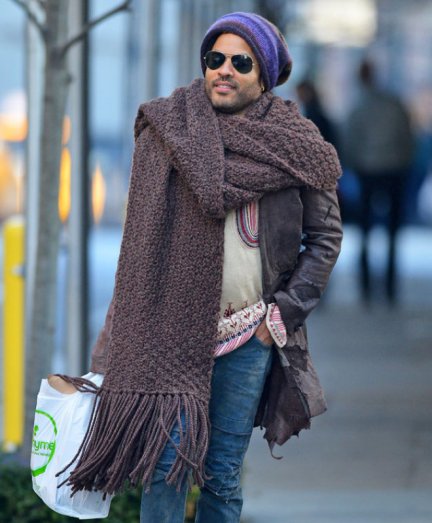
Can you sew a pair of pants by hand? Sure, but it’ll be messy as hell. Can you use a pattern to make it much more neat and then clean it up when you’re done? YES. Nobody’s going to want a pair of jeans with seventeen buttons on one pant leg and no fly, or a scarf that’s way too big—

634.LennyKravitz.mh.010713.jpg

Never mind. Sorry, Mr. Kravitz.

What I’m saying is that giving yourself time to plan and outline the story before you start writing will give you knowledge about the highlights and important areas in your story, and also tell you which parts can get chopped off right away. Sometimes people write out of order because the parts come to them that way. I do this sometimes when I find the urge to write a particular scene before I’ve gotten there. It can work because I’ve outlined specific instances to happen, so my brain is still working out how they go together, even if I have several pages from the beginning and end done with no middle sections.

Your outline should always be in the order that your book needs to go, regardless of how you write. It gives you a ladder that you can follow to reach the top, even if you’re hopping from the third rung to the eighth.

Does outlining guarantee your story will be right the first time?

In no way does any planning you do beforehand guarantee that everything will work perfectly in the long run. There are always complications in writing, and sometimes, your character will simply run you into a corner before you realize what’s happened. Sometimes the outline needs to change because you realize that parts of it won’t work or don’t suit the direction you’re trying to go. Maybe the goal changes and you need to rewrite that super sweet space battle or remove it entirely.

Just like your writing won’t be perfect the first time around, your outline will often change as the story develops and fleshes out. It’s the nature of writing. It’s a living, moving, writhing, sometimes bratty piece of work. It occasionally has a will of its own and will make you feel like you’re trying to convince a toddler not to stick that shiny thing in their mouth. But the important thing is to push through it and get to the end, whether you’re happy with it or not…

…And then hire a crazy awesome editor to clean it up for you. ;p

Reflections!

Blog Articles

A lot of things have happened for me in the last year. Not all of them great, but some of them pretty wonderful. May 3rd was the anniversary of the day my (now) husband and I officially started dating, waaaaaay back in good ole’ 2011. We celebrated quietly (because one can only have so many anniversaries, I am told, and marriage trumps dating), ate dinner, played GTA 5, and my husband gave me a glorious Sailor Moon figure, because, yes, we really are that much of a geeky couple.

It was, unfortunately, also the day that marked a big sadness in my life: the day I got rear-ended by a–not soccer mom, I was vehemently corrected–woman in her “athletic sport-abled transportation vehicle.” It caused a lot of issues, a lot of pain, and a lot of pure, utter, nonsense. It’s a part of my life I am hoping to put behind me.

Because of these things, May 3rd caused a lot of reflection for me. I will be twenty-eight in a scant few days. If my grandmother were here, she’d tell me I’m only a year away from her favorite age of twenty-nine. When I was little, I actually looked forward to getting to that age so I could tell people the same thing my grandmother told them all the way up until she passed: “I don’t care what my birth certificate says, I’m twenty-nine and holding.” This is the woman whose thick Brooklyn accent I adored to mimic, who always had a electronic gambling game in her purse, a cigarette in her hand, and lipstick on her glass.

It’s amazing the things you think about around birthdays, isn’t it?

These days it doesn’t feel like I have time for anything. Much less for reflection, so the third was an interesting–albeit it bittersweet–period. About a year and a eight months ago, I graduated from college. Half a year after that, I started working as a proofreader. About eight months ago, I got married. Three months ago, I got promoted to editor. About two months ago, I started editing job number two, and hell if my days haven’t just been a whirlwind since then. Working in your industry is great; it’s what you strive for. Of course, the pay doesn’t really cut the mustard some days, and your workload is shit, but the thing is, you adore what you do. And I do. I don’t mind filling my days with editing and my downtimes with video games… but it doesn’t leave much time for my writing stuff.

When I went to school for creative writing, I had grandiose dreams of finishing a couple novels, getting some short stories out, and eventually having a successful editing company of my own. Of course, the real world never works out like a five year plan… and slowly that plan began to look more like fantasy than the novels I read for a living.

(Still, it’s hard to complain. I read books for money and tell them how to make it better!)

so_good

When you can actually fix the misspelled words in a book

I’ve been trying to cram a lot into a very limited amount of time, however, and recently, that meant pushing myself to clean and polish (read: cut 8,000 words out of) a short story of mine, in the hope that I can submit it for publication in an anthology. I’m super stoked, if not perhaps nervous that I’m taking their ‘20,000 words or less rule’ a bit too literally.

Screenshot 2015-05-08 05.02.36

I take word count to heart, thank you very much.

Like all hopefuls, I’m eager to see the acceptance email after working on something so hard, but there’s still the nagging doubt that I’ll be able to do it at all. Editing other people’s work makes me understand how great it is. Editing mine? Not so much.

(Hint to any struggling writers out there: You are probably your own worst critic… so don’t listen to you.)

Maybe the five year plan isn’t working out the way I wanted; maybe my dreams are different now, and maybe a couple got derailed in lieu of more realistic expectations.

That’s okay. Gonna keep at it and hope I hit my mark one day.

Wish me luck! The deadline is June 1st. ;p

‘The Coffin Blind’ Excerpt

Blog Articles

“Is that Gaven?” Ingrid lifted a pale hand to shade her equally pale blue eyes and stared into the setting sun’s light.

Irritated, Elijah only nodded.

“He shouldn’t force the emissaries to act. They’ll just send him to the Farm,” Ingrid said.

Elijah squirmed uncomfortably. He couldn’t let Ingrid know how close he had come to crying. “Should we say something?”

She thought for a moment. “He lost his family today… leave him alone.”

Elijah was grateful for her empathy—a rare trait among a culture where deep emotions were deemed distasteful. The chastisement of Gaven’s actions was nothing more than rote; one of the strange laws they’d followed compliantly since the End nearly thirteen cycles prior.

Elijah often wondered what it had been like before the End, but he couldn’t picture it since he’d been born into the new world. Now, all he had to imagine the lives of his parents and siblings were pictures and remnants. He wondered if it was harder for the others who knew both, or for him not to have known it at all. The way they mentioned it was almost reverential; he was sad he would never understand.

In the village behind them, hushed whispers announced the coming of the emissaries.

At her hip, Ingrid’s hand tightened on the pommel of her short sword, and Elijah followed suit. Did someone already call them? He wondered. After a few minutes of fearful expectation, he forced his hand to unclench.

After all we’ve seen today, Elijah pondered as survivors turned and dissipated into the dark houses of the settlement, maybe they don’t want to cause more pain?

It wouldn’t last, though.

It never did.

Settle

Poetry

????????????????????????????????


she was dressed in black

when they finally took her pulse

and she was bleeding out this sorrow
from the blank spots in her pores

and they promised that tomorrow,
that tomorrow’s gonna come,

but her eyes are set on somewhere deep,
and past the setting sun.

She knows she’ll never shake it,
that sort of crying in her eyes,
and she can feel her body dying
but she knows that it’s not time,

but they said that in the end when
all the sadness is all gone,
that someone’s gonna be there

and they swear they’ll guide her home.

yesterday’s a mystery, but no more than today,
and there’s a solitude in silence

and a heart in disarray,

and she finally finished sewing that one outfit
for the one

who she hopes is gonna be there when her dyin’ is all done

and this one is the story that she’s never gonna tell,
and this one is scraped up knee that bled each time she fell,
and this one is that speck of tear inside of each her eyes,
and this one is the face that she would use for a disguise.

she knows she’ll never fake it,
that sort of dying in her eyes,

  and she’s always sort of bruised
and battered down from time to time,

and by now she knows the ending,
(she’s pretty sure her story’s done,)

so she’s finally gonna’ walk alone
into the setting sun.

Mus(e)ic?

Blog Articles

It’s hard to get your muse in gear and actually get your work done by and by. Whether that work is writing or anything else in life that requires even a modicum of attention and energy, there are times when procrastination is key and my best friend and keeper. I know that I sometimes procrastinate without reason, even if the only one I’m disappointing is myself and a perhaps overly large pile of laundry that I’ve meant to fold and/or hang up for like, three days now.

Ahem.

During my writing, editing, or basically anytime I’m in front of the computer, you can guarantee one of two things. One, I will have a word document open in the potential that I will get writing done, and two, that I will have music playing. Doesn’t matter what music, unless I’m in a routine obsession with a particular song—you know, the ones that you play over and over until you’re sick of them?

images

They literally almost couldn’t fit all of the 80s in there into this picture. 

Pandora will be coasting through everything from classical music to dubstep like my own personal tunage fairy that constantly batters me with ads. (PAY for music? Please, Internet. I grew up in the Napster and Limewire era, friend.)

While I absolutely love listening to music as I work, I know that the wrong music can be utterly devastating to writing. For instance, sometimes it’s impossible to be able to write while a song with lyrics that you know plays. I have occasionally found myself typing the words to the songs, completely oblivious that I’m doing so until it’s too late and I’ve lost my original train of thought.

I once attended a school for graphic design before switching my degree to creative writing, and I had a lovely Russian art teacher for a semester whose job it was to teach some kids who had no formal training how to draw still-lifes and use shadowing and that weird thumb-and-pencil thing to measure objects that I never quite got around to perfecting. (Or using… ever.) To this day, whenever I pick up the pencil to sketch anything, I still hear her voice in my head telling me to “Drah sroo za shape.” She was very keen on using music to stimulate creativity while drawing, and was a fan of techno beats and discotheque European music. Occasionally, we heard a cool song or two, but what I remember her for most was when she’d forget to change a library from repeating one song to repeating them all, and so we’d hear that self-same wub-wub house music song for about two hours of our four hour long class before she’d realize it was repeating and change it. By the end of two hours of Eastern European techno, you’re about ready to shoot yourself in the head to make it stop. Needless to say, some days were more productive than others.

It’s kind of a given that things that are catchy and upbeat have a tendency to capture the attention, and I definitely can’t write a sad scene to happy music, or vice versa. I find my own moods often mirror my character’s scenario as I think, and there’s no way that I can write a sad scene listening to a tune that makes me smile.

Ever try to kill someone to pop music? Can’t be done.

Believe_Tour_13,_2012

There are of course, always exceptions.

If only that grimace was early-onset cardiac arrest.

Music is a strange creation in that it has the ability to regulate our moods and flood our brains as we speak or try to communicate. It’s pretty unique in that it can be both inspiring and ungodly awful with only the difference of maybe a few notes between your favorites and least favorites. Used properly, it does in fact stimulate the brain to work more creatively, or throw you into mind-numbing bouts of self-depression… (Especially if that music is country).

taylor-swift-white-horse-vid

Look, she didn’t get rich on a long lasting, healthy and fulfilling relationship, is all I’m saying, okay?

Super Bowl-Sh*t

Blog Articles

I am not normally one to watch football and don’t watch any of the matches through the rest of the year, so it doesn’t matter to me which colored jersey wins, ya dig?

(My sister-in-law and brother-in-law and I just so happened to choose the winning side to root for, which was a psychic bonus, I suppose.)

That being said, as a family, we all sit down and watch the Super Bowl, and so I had a chance to spy the infamous ads which would later cause such an online flummox.

At any rate, watching the commercials during the breaks, I wasn’t ‘blown away’ by any, and some even made me smile a bit. I mean, I don’t even drink Budweiser, but I love their Clydesdale commercials—who doesn’t love puppies and horses?!

1391224686922

 …I digress.

Never once did it occur to me that two ads would have made such an outrageous impact for ALL of the wrong reasons.

Now, I watched both of these ads. I watched them with my whole family, and none of us saw anything wrong with them. We just watched them and moved on, but the Internet was already abuzz with misplaced rage.

Why? Because in this day and age, ignorance can’t be contained. It must be spread online, typically over social media forums that allow for people to spew their idiot vomit in 140 characters or less.

So, in lieu of simply calling people on their backwoods bullshit, let’s break down all of the fun reasons that people who found these commercials offensive are racist, bigoted morons!

Coca Cola has people singing “America the Beautiful” in languages other than English.

1. “I didn’t like people singing the national anthem in another language.”

If you have made it to an age where you can go out into the world and type with any kind of clarity into social media a slightly literate sentence about your opinion… you should at least be able to understand that if you’re going to open your mouth about something, you should have some facts to back it up.

a)    America the Beautiful is NOT our national anthem. Our national anthem is The Star Spangled Banner.

b)   This song was written by Katherine Lee Bates (*gasp*, a WOMAN?!) who was also a lesbian (Double gasp!). She left the Republican party in 1924 over growing xenophobia.

c)    Xenophobia: the intense or irrational dislike and fear of people from other countries (sound familiar?)

2. “This is Uh-meri-cuh. We speak ENGLISH here.”

a)    America has no official national language. This is because we are a melting pot… Think of the Statue of Liberty’s inscription. “Give me your tired, your poor, your huddled masses…” The inscription didn’t say, “Give me people who speak American English and nothing else.”

b)   We have plenty of U.S. citizens (legit citizens, okay?) who speak a language other than English, but are still American. It happens, since, you know, immigration from other countries.

c)    American English is a hard language to learn, but you know what? Some foreign countries actually assign it as a language in their classrooms. There are foreigners all over the world who have mastered the English language better than a good portion of Americans in America.

d)   How many people in America can easily discern the difference between:

It’s and Its;

Two, To, and Too

Your and You’re

They’re, Their, and There

Where and We’re

Write and Right

EnglishGrammar

Believe it or not, this is foreign language to some Americans…

Cheerios shows an interracial couple with a child.

a)    Welcome to America, where your birthplace doesn’t matter, but the color of your skin does? If you can’t get it through your skull that people are people, and we’re all pink and meaty on the inside regardless of our exteriors, then you really should go back to high school biology class and retake that segment, because clearly, you missed a huge plot twist.

b)   People evolved and adapted over many years to develop different pigmentation in their skin based on their environments and what they required in order to survive. Us extra white white people lived in regions where it was cold, we didn’t stay in the sun all day, and in a lot of places, it snowed. Therefore, we developed lighter skin, because nature decided that was what we needed. The good portion of people with darker skin lived in hotter climates, where their darker skin protected them from a harsher sun, and ensured that they wouldn’t stick out like… well, like a white person on the Savannah.

c)    Science, bitches.

d)   Because we are able to migrate all over the world today, and people of any racial orientation can move wherever they want, there are tons of people from different places everywhere.

e)    Sometimes, those people fall in love with someone who doesn’t look like them. Imagine if there was a fallout because blonde people were marrying brunettes instead of other blondes. See how silly that is? Now apply that ideal to skin color. It’s pretty lame, isn’t it?

Before this totally blows your mind, I assure you, there is no rule where someone of one race can’t fall in love with someone of another race. Our parts all work the same in the end, and again, if you can’t figure out that we’re all just people, you should probably go and learn that so you can understand how someone could have a baby from such a union.

(Hint: It’s the regular way since they’re no different from you)

I would really love for people to stop letting hate-mongering idiots dictate their views.

Let’s drop that racist ‘Murica! mentality for 2014, okay?

NaNoWriMo hangovers, anyone?

Blog Articles

I’ve been AWOL for a bit because I’ve been swamped with other writing and editing work, which is a good thing, and an insane undertaking at the same time.

When November started, I actually had this crazy idea in mind to take a break from novel writing for a while, because, well, I worked on my two fantasy novels an awful lot, and dammit if I didn’t want a break. So what did I end up doing?

If you guessed that I completely ignored the opportunity to take a rest from writing by writing at a more furious pace than ever, then… wow, you know me pretty well.

And for the record, get out of my head.

I decided on day 5 that I was going to take a crack at NaNoWriMo, because hey, I had a book idea, and two, “Why not?” It was only after the ridiculously grueling pace for myself cut in that I realized I had written my 50,000 word quota by the 23rd of November, thus making myself slightly more insane than usual, and even squirrely-er than ever.

(Do other people not hiss when daylight hits their eyes?)

After getting myself to 60,000 words by the end of November, I know that I am dying to take a break from it all. How did everyone else fare? Did you get your word count, or close to?

4042-168

I’m hoping to have this latest book, The Death of Narcissus finished within maybe two months, and then I’ll start trying to get that beastie pared down and beefed up, dependent on whatever it needs. This is a rush job, so I’m not going to kid myself… it’s GOING to need some work. 

(And of course I’ll have a sneak preview for you guys later on!)

In the meantime, I’ve also recently gotten the opportunity to apply to be an editor for a publishing house, which is very exciting stuff. The opportunity came just a day or so after I received my diploma in the mail, which seemed like a pretty life-choice affirming coincidence, if you ask me. Between my writing, editing, and the work I’m doing in the industry, I’m hoping that my big payoff is going to come any day now. I could use a vacation… maybe go to a tropical island paradise to… I don’t know. Read and write, probably.

That’s the only way we bookworms know how to enjoy ourselves, apparently.